Prompt
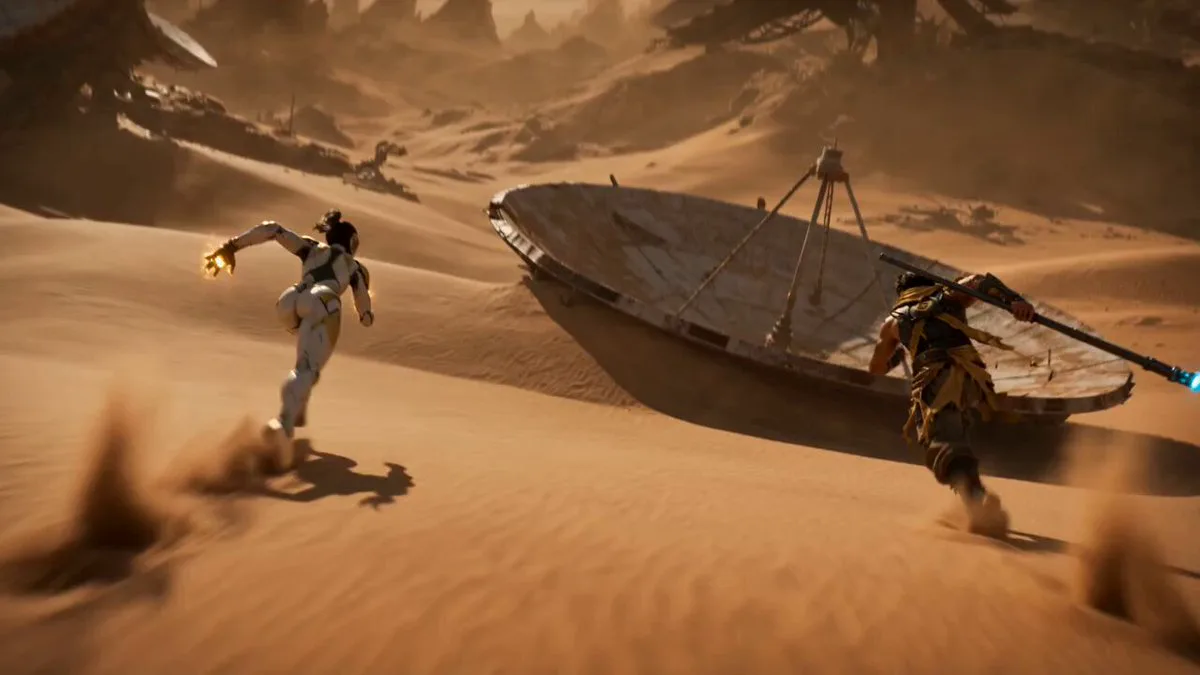
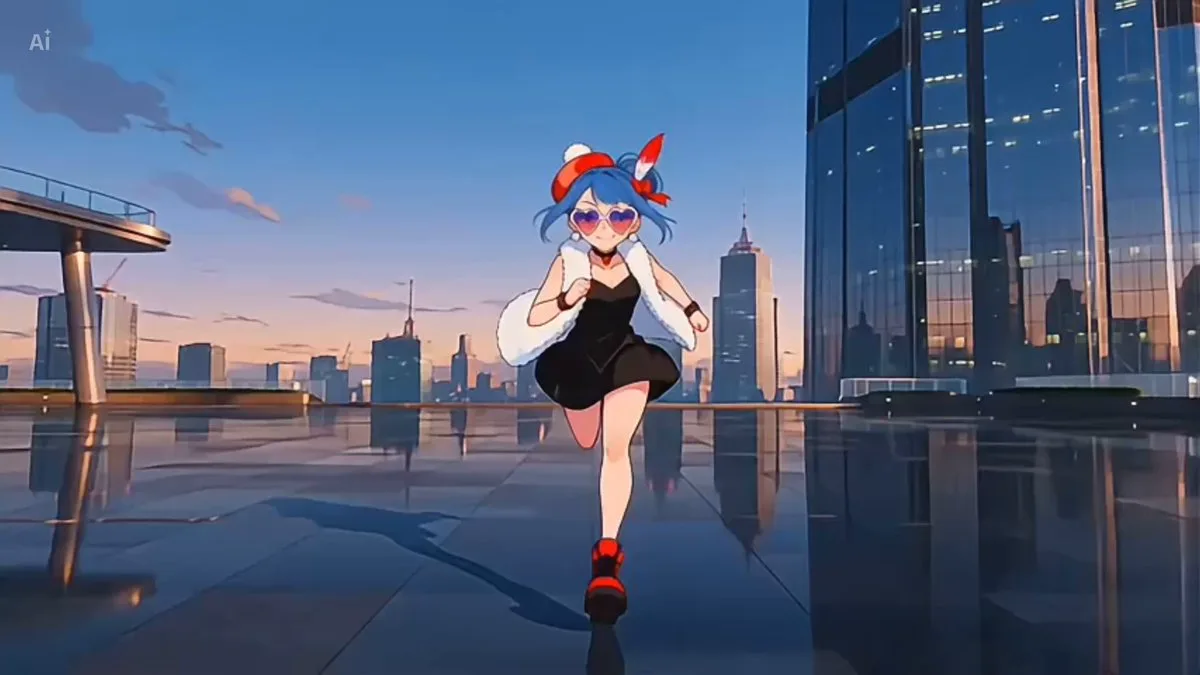
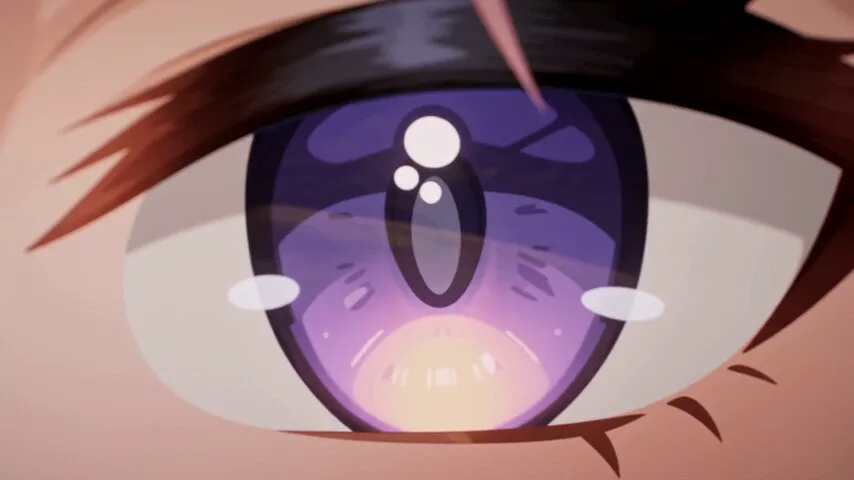
1309 wordsHigh-quality anime footage. High-density 3D toon/cel-look cinematic action RPG high-speed swordplay. Movie-theater class key animation, high-quality compositing, transparent lighting, and dense background art. In an 8-second short duration, high-density connection of floating sword onslaughts, defense, evasion, reaction force, siege, and maximum collision. [Reference Image and Person Fixation] @1 is the first person, character A's reference image. @2 is the second person, character B's reference image. Refer to the character in the source reference image and maintain them as the same person respectively. The reference image is used only for character face, eye shape, iris color, hairstyle, hair color, costume, decoration, physique, silhouette, atmosphere, character color, and weapon design. Do not reproduce the background, room, furniture, pose, angle of view, framing, characters, or split layout of the reference image itself. The two are same person, same character identity throughout. Only expressions, gaze, mouth, posture, breathing, and natural hair and costume swaying may change. Do not generate mixed features, face averaging, hair color exchange, costume exchange, weapon exchange, physique change, becoming a different person, cloning, alter egos, or additional people. [Automatic Adjustment of Worldview and Stage] Combat content, positional relationship, motion, power relationship, number of swords, and camera structure are fixed. Only background, props, architectural style, flooring, weather, lighting, color, particles, and environmental effects are redesigned according to the character designs of @1 and @2. From the costumes, decorations, weapons, materials, patterns, unique colors, and motifs of the two, construct a new cinematic combat stage where both can naturally exist. Choose the most suitable stage from school city, palace, temple, garden, fantasy city, industrial facility, near-future space, etc. However, do not copy the background of the reference image directly. Place contact expressions suitable for the world view on the floor, such as reflections, water droplets, dust, petals, sparks, and magical particles. Use only props suitable for the stage, such as balustrades, pillars, glass, trees, mechanical structures, magic devices, and light lines. Make the background one step darker than the characters to clarify the face, silhouette, and sword trajectory. Use Character A's unique color for the attacker's key light, the floating sword's aura, and the slash afterglow. Use Character B's unique color for the defense light, counterattack afterglow, and fill light. Do not mix the colors of both and keep them clearly identifiable. [Fixed Art Style] Thin and delicate colored outlines. Clear two- to three-level cell shading on faces, hair, costumes, and weapons with transparent intermediate shadows. High-density drawing of details existing in the reference image, such as multi-layered highlights for pupils, delicate bunching for hair, and embroidery, lace, armor, chains, gems, and metal fittings for costumes. Draw cloth, leather, metal, gems, glass, and floor with different reflectivity and roughness. Do not use thick black outlines, flat single-layer cell shadows, simplified TV anime, generic 3D beautiful girl faces, plastic CG, low-density backgrounds, semi-realistic, live-action, dull colors, or mixed art styles. Do not copy the art style of the reference image, but unify it into a high-density 3D toon/cel-look. [Fixed Weapon] Character A uses one handheld sword and four floating swords floating around the body. The floating swords are arranged to surround A above, below, left, and right. Character B uses one handheld sword. The total number of swords in the entire video is fixed at six. Even if the weapon in the reference image is not a sword, redesign it into a sword that inherits the color, material, design, decoration, and motif of that weapon. A floating sword is a single complete sword with the blade, guard, and handle connected. It moves in a clear flight trajectory only during an attack and returns to around A after contact or evasion. No multiplication, disappearance, fusion, transformation, or addition of extra swords. Do not rotate only the tip or blade independently. Hold only the handle of the handheld sword, and do not grab the blade with your hand. [Floating Sword Effect] The four floating swords wear a thin flame-like, mist-like, particle-like, or lightning-like aura centered on Character A's unique color. The expression format should match A's world view, but it must be closely attached to the blade. Draw a short tail in the direction of movement, and do not make it into a huge independent laser or a separate beam of light. The slash afterglow occurs as a curved afterglow closely attached to the sword's sweep surface. [Power Relationship] Character A is a superior person who calmly takes the initiative. While manipulating four floating swords at intervals, she also moves forward with a handheld sword. Character B tries to deflect, avoid, parry, and counterattack the onslaught with high swordsmanship, but is gradually pushed back because the attack direction changes continuously. Maintain asymmetrical movement where only A advances and only B retreats. [Camera] Use a diagonal low-angle camera passing through floating swords, over B's shoulder, close to the contact point, circling about 60 degrees around the contact point, and approaching the final collision, rather than a fixed horizontal viewpoint. Use floating sword passes in front of the lens, environmental particles, splashes bouncing from the floor, and sword light for short occlusion wipes. The camera and background rotate; do not rotate the characters pointlessly. [8-second Motion Configuration] Cut 1: Starts with four floating swords stationary at A's top, bottom, left, and right. The camera shows A's face, upper body, decorations, and handheld sword from a diagonal low angle passing between two floating swords. A moves forward quietly and catches B with only her gaze. Immediately after, the top right floating sword accelerates and flies diagonally toward B's left shoulder. Cut 2: Over B's shoulder. B deflects the first floating sword outward with both hands' swords at a single contact point between the centers of the blades. Metallic sparks, magical sparks of both unique colors, environmental particles, and reaction force are generated. The deflected sword returns around A in an arc. Then, the second one on the bottom left runs close to the floor, and B ducks low to avoid it by a hair's breadth. The third one on the top left descends from diagonally above, and B returns the sword to parry it. Cut 3: Shows A diagonally in front from the occlusion of environmental particles. A steps in without stopping and slashes up from the bottom right to the top left with a handheld sword. B catches it while retreating. The moment the two handheld swords contact at one point, the bottom right floating sword invades from B's side. B avoids it by pulling his shoulder, but his posture flows to the side. A slides the contact to release it and moves further into the bosom. Cut 4: The camera circles about 60 degrees around the contact point. B uses the reaction force to release a counter-slash, but one of A's floating swords contacts from the side and deflects B's sword upward. A swings the handheld sword down from the top left to the bottom right. B rushes to catch it but his feet slip and he is pushed backward. The remaining three floating swords spread to B's left, right, and above, creating a siege composition that narrows the retreat path. Cut 5: Diagonal low-altitude camera. A advancing to the front left, B being pushed into the back right. B steps in as a final counterattack. A also does not stop advancing and releases a rising slash from the bottom left to the top right. The two handheld swords form a clear X-shape at a single central contact point. One floating sword applies additional pressure to B's blade from the side, and the remaining three take the next slashing posture around. A's attack color and B's defense color rise separately, forming a huge two-colored X-shaped color surface outside the narrow white-hot core in the center. Radial shockwaves, environmental particles, steam, and sparks spread. B's back foot slips, his knee sinks, his both arms and shoulders...
About this prompt
Cinematic Anime Magic Sword Battle is a Anime Seedance 2.0 prompt with 1309 words, structured around shot timing, camera direction, motion cues, and remixable scene details.
Use the preview clip when available to understand pacing, then treat the prompt text as a production brief you can adapt for your own subject, brand, or story.
Video prompt structure
Use it for Anime videos
Best for Seedance 2.0 generations that need Anime, Multi-Shot, Image Reference. Replace the subject, setting, product, dialogue, music, and timing before sending it to the generator.
Customize before generating
- Swap the subject. Keep the camera and timing structure, but change the character, product, or environment.
- Tighten the timeline. Shorten or expand shot blocks so they match the duration you want to render.
- Add reference media. Use first frames, last frames, images, video, or audio when the prompt depends on a specific look or rhythm.
More Seedance paths to explore
Browse adjacent styles and techniques from the same Seedance 2.0 prompt library.
How to use it
- Step 1
Copy or start from this prompt
Use the full prompt as a structured draft rather than rewriting the whole video brief.
- Step 2
Open Seedance 2.0
Send the text into the Seedance generator and choose text, image, or reference mode.
- Step 3
Adapt and render
Tune duration, aspect ratio, reference media, camera notes, and dialogue before generating.
Make it a Seedance video
Start from this prompt in the Seedance 2.0 generator, then adjust the scene, duration, aspect ratio, and reference media.